Watch a Formula 1 team work through a race weekend and you see two forms of knowledge operating at once. A great driver develops an almost unteachable feel for the car — sensing a shift in grip through the seat, catching a change in the front tires a corner before it shows up on the stopwatch, calling understeer on the exit of turn twelve while the lap time still reads clean. That feel is real, and the strongest teams treat it as a first-class signal rather than a soft one.
But no team acts on feel alone. Every lap, the car returns a stream of telemetry: speed traces, brake pressure, throttle position, the lateral load through each corner, tire temperature measured across the contact patch. When the driver reports understeer, the sensation tells the engineers that something changed. It does not tell them what. The cause could be tire degradation, suspension geometry, fuel load, or a two-degree rise in track temperature — and each demands a different response. The intuition locates the problem. The measurement diagnoses it. Engineering operations built to that standard, the culture of a group like McLaren Applied, exist precisely because a diagnosis under those stakes cannot be left to a guess.
The Gap in Human Performance Systems
Human performance has largely operated with only the first of those two layers. The dominant instrument is still the subjective report. A practitioner asks an athlete how they feel, to rate the day out of ten, whether yesterday's session sat well — and records the answer. This is not worthless. A person's read on their own state carries genuine information, and it often arrives earlier than anything else does.
But a number on a ten-point scale cannot separate the causes stacked beneath it. A six might be nervous system dysregulation. It might be accumulated training load, a night of fragmented sleep, or a psychological weight that has nothing to do with the body at all. The signal is genuine; the resolution is insufficient. In elite sport, in aviation and emergency medicine, in any domain where a decision carries irreversible cost, insufficient resolution is not a minor shortcoming. It is the whole problem.
What Controlled Measurement Adds
A controlled measurement environment supplies the layer that subjective reporting structurally cannot: repeatable, individual data on how a specific nervous system behaves under load. Apply a known, standardized perturbation and the system answers in measurable terms. Its disturbance threshold marks the level of load at which regulation begins to break down — the point where this person, specifically, starts to destabilize. Its response magnitude captures how strongly the nervous system reacts once that load lands. Its recovery half-time records how long the system takes to return toward baseline afterward. And its regulation stability describes how consistently the system governs itself across repeated perturbations, rather than in one fortunate reading.
Together, these four measurements are the telemetry layer for the human nervous system — the trace the practitioner has never had. They do not overrule a coach's judgment or a clinician's experience. They give that judgment a fixed reference point to read against, the way a race engineer's data gives the driver's feedback something concrete to be checked against.
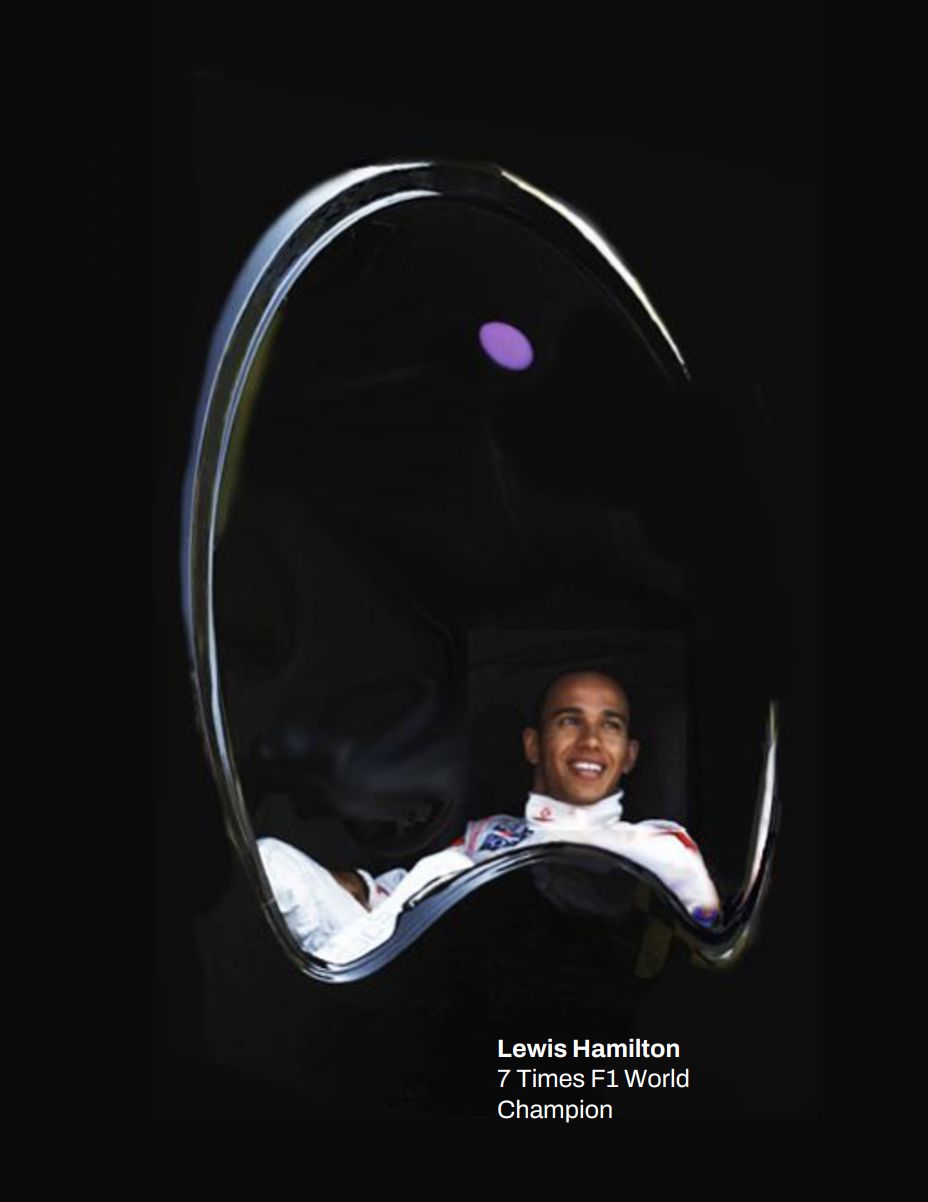
The lesson from motorsport is not that measurement replaces feel. It is that the two were never alternatives. Intuition and measurement are partners: one senses that something has changed, the other establishes why, and neither is complete on its own. The purpose of measuring the nervous system is not to discard what practitioners already know — it is to give that knowledge a reference point precise enough to act on. No serious team would put a car on the track with only half of that picture. The same standard is now available for the people we ask to perform under the most pressure.